
What is the ITE, Technical Building Inspection?
The Technical Building Inspection (ITE) is an essential procedure in the real estate sector, especially in the urban area. This process ensures that buildings meet safety, stability and health requirements. The ITE is mandatory in many countries and its main objective is to detect and correct any deficiencies that may compromise the safety of residents and the integrity of the building. In this article, we will explore in depth what ITE is, what aspects it evaluates and what its advantages are. In addition, we will offer practical advice for property owners and managers.
What is the Technical Building Inspection?
The Technical Building Inspection (ITE) is an exhaustive review that certain buildings must undergo to ensure that they meet the minimum conditions of safety, habitability and ornamentation. This inspection is carried out periodically, and its frequency varies depending on local regulations. In general, it applies to buildings that are more than 30 years old, although this period may vary.
Who performs the ITE?
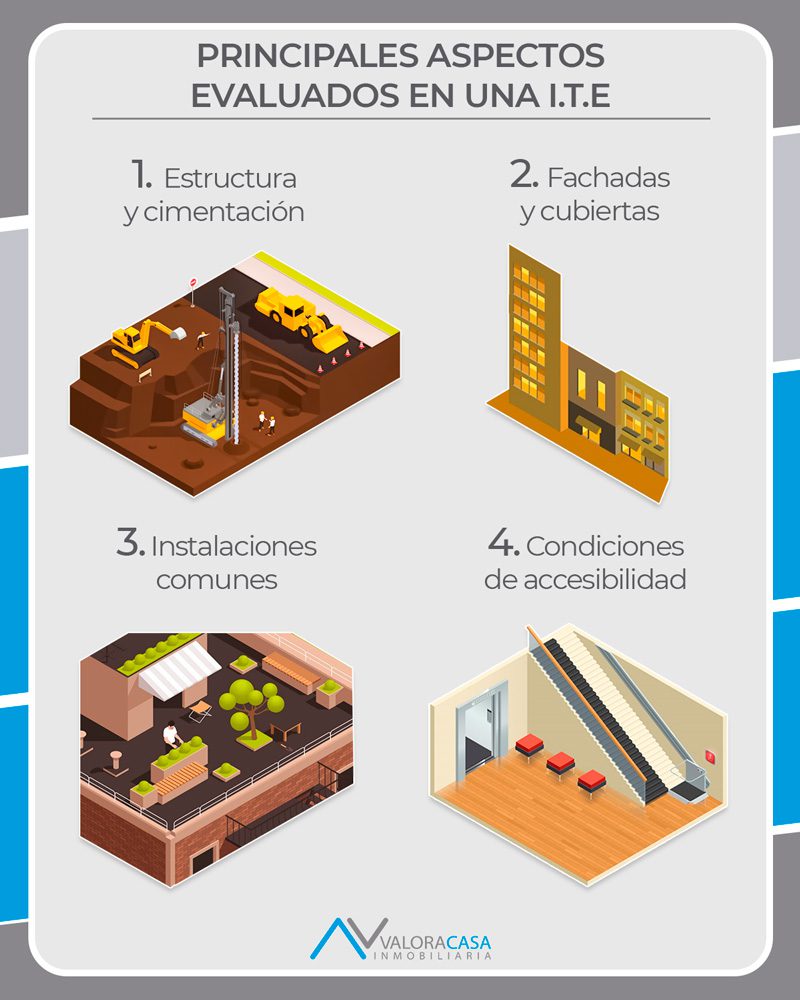
The ITE must be carried out by accredited professionals, generally architects or engineers specialized in construction. These professionals will evaluate various aspects of the building, including the structure, facades, roofs, common facilities and accessibility.
What are the main aspects evaluated in the ITE?
- Structure and foundation: It is verified that there are no damages or pathologies that could affect the stability of the building.
- Facades and roofs: Possible detachments, cracks or waterproofing problems are checked.
- Common facilities: Plumbing, electrical, sanitation and elevator installations are inspected.
- Accessibility conditions: It is ensured that the building complies with accessibility regulations for people with reduced mobility.
Differences between the ITE and other inspections
There are several technical inspections related to the maintenance and safety of buildings. Key differences between ITE and other inspections are highlighted below.
ITE vs. CEE (Energy Efficiency Certificate)
While the ITE focuses on the safety and structural integrity of the building, the CEE evaluates the energy efficiency of the property. The CEE classifies buildings according to their energy consumption and CO2 emissions, providing recommendations to improve energy efficiency.
ITE vs. Occupational risk inspection
The occupational risk inspection focuses on the safety and health of workers within the work environment. Although it may include aspects of the building structure, its primary focus is on ensuring a safe work environment.
Advantages and disadvantages of ITE
Like any procedure, ITE has a series of advantages and disadvantages that are important to consider.
Advantage
- Security: The ITE guarantees that buildings are safe for their occupants, preventing possible accidents and damage.
- Preventive maintenance: Helps identify and fix problems before they become costly repairs.
- Property value: A building that has passed the ITE may have a higher value in the real estate market.
- Legal compliance: Avoid sanctions and fines resulting from non-compliance with current regulations.
Disadvantages
- Economic cost: Performing the ITE and possible repairs can be expensive.
- Bureaucratic procedures: The process can be long and bureaucratic, which can be a hassle for homeowners.
- Mandatory: Some owners may see ITE as an imposition, especially in buildings that do not have obvious problems.
Practical tips for owners
If you are the owner or manager of a property that must pass the ITE, these practical tips can help you deal with the process efficiently.
- Plan ahead: Don't wait until the deadline is close to expiring. Plan the ITE with enough time to make any necessary repairs.
- Choose an accredited professional: Make sure you hire an architect or engineer with experience carrying out ITEs.
- Keep the building in good condition: Perform regular preventative maintenance to minimize repairs needed during ITE.
- Inform residents: Keep residents informed about the process and possible implications to avoid conflicts.
- Apply for grants: Find out about possible aid or subsidies for carrying out the ITE and the necessary repairs.
Conclusion
The Technical Building Inspection (ITE) is a fundamental tool to guarantee the safety and habitability of buildings. Although it may represent a cost and bureaucratic burden for owners, its advantages in terms of security, maintenance and value of the property are undeniable. By understanding the differences between ITE and other inspections, as well as their pros and cons, homeowners can be better prepared to navigate this process. Planning ahead and maintaining good condition of the building are key to a successful ITE. Remember, a safe and well-maintained building not only complies with regulations, but also provides a safer and more comfortable environment for all its occupants.
Contact