
Developable Land: What They Are, What Can Be Done and How to Know if a Land is Developable
In the world of purchase and sale of real estate, understanding what urbanizable land is and how to identify them can make a big difference. This article will provide you with a complete guide on what urbanizable land is, what can be done with them, and how to know if a land is urbanizable. In addition, we will explore the differences, advantages and disadvantages of these lands, offering practical advice for buyers and vendors.

What are urbanizable land?
Urbanizable lands are those that are designated by the urban planning plan of a city or municipality to be developed for residential, commercial or industrial purposes. Unlike rustic or agricultural land, urbanizable lands are intended to become habitable or productive areas through the construction of infrastructure such as roads, public services, and buildings.
Characteristics of urbanizable land
Location:
They are usually found on the outskirts of cities or in urban expansion areas.
Infrastructure:
They may be partially developed or completely empty, but always with the possibility of adding infrastructure.
Regulation:
They are subject to specific urban development regulations.
What can be done in urbanizable land?
The purchase of urbanizable land opens a range of possibilities in terms of development. Here are some options:
Residential development
One of the most common uses is housing construction. This can include single -family homes to apartment complexes.
Commercial Development
Urbanizable land can also be used to build shopping centers, offices, hotels and other types of commercial infrastructure.
Industrial development
In some areas, these lands can be used for the construction of factories, warehouses and other industrial facilities.
Public spaces
Parks, recreational areas and other public facilities that improve the quality of life of the community can also develop.
How to know if a land is urbanizable
Determining if a land is urbanizable implies a series of steps and consultations that can be facilitated with the help of professionals. Here we leave you a simplified process:
-
Check the Urban Planning Plan
The first step is to review the General Urban Planning Plan (PGOU) of the town where the land is located. This document specifies which areas are intended to be urbanized.
-
Verify the zoning
Zoning is crucial. This term refers to the rules that determine what types of constructions can be carried out in specific field. Urbanizable land will have a zoning that allows development.
-
Consult with the City Council
Visiting the local City Council will allow you to obtain specific and updated information about the status of the land. Here you can confirm if there is any future development plan that affects the land.
-
Hire a professional
An architect or urban engineer can carry out a viability study and confirm the urbanizable state of the land. They can also help you understand the specific regulations and possible associated costs.
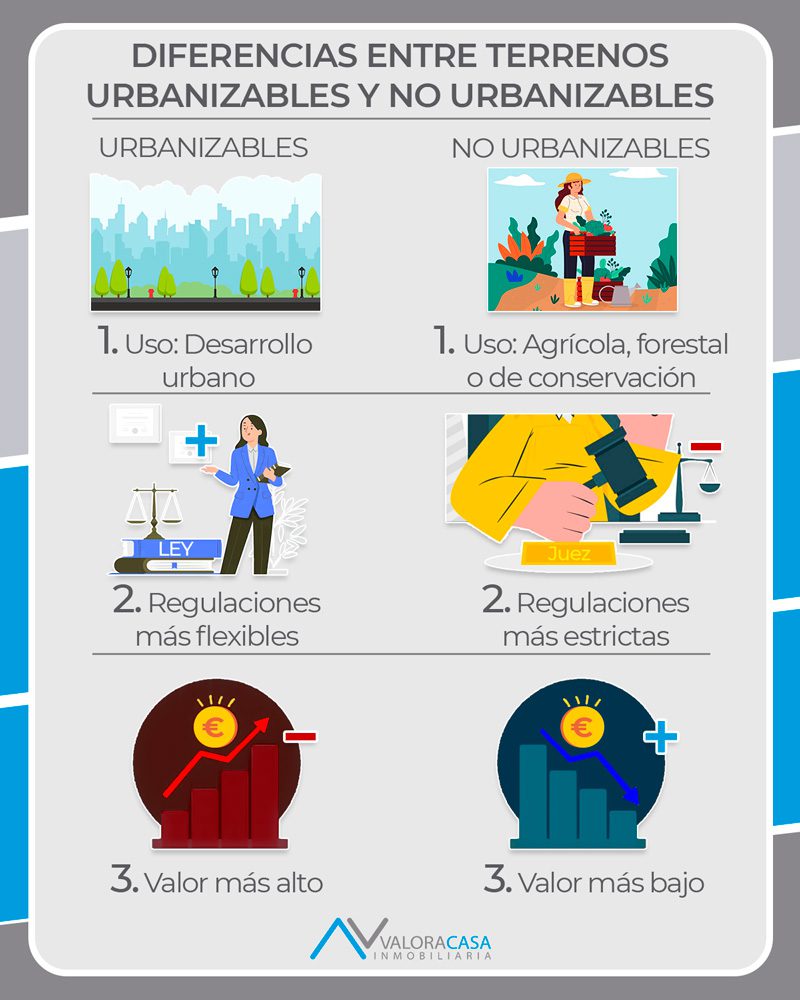
Differences between urbanizable and non -urbanizable land
Building Land
- Purpose: Destined for urban development.
- Regulation: Subject to specific urbanization regulations.
- Valor: Generally higher due to its development potential.
Non -urbanizable land
- Purpose: Destined for agricultural, forest or conservation use.
- Regulation: Stricter in terms of construction and development.
- Valor: They usually have a lower value compared to the urbanizables.
Advantages and disadvantages of urbanizable land
Advantage
- Development potential: High possibility of increasing the value of the land through development.
- Safe Investment: Generally, the demand for urbanizable land in urban expansion areas tends to be high.
- Flexibility: Diversity of potential uses (residential, commercial, industrial).
Disadvantages
- High initial costs: Initial investment can be significant due to the need to develop infrastructure.
- Regulation risk: Changes in urban regulations can affect the value of the land.
- Development time: The urbanization process can be long and bureaucratic.
Practical tips for the purchase and sale of urbanizable land
For buyers
- Exhaustive research: Conducts complete investigation into the land and its regulations.
- Check professionals: It works with architects and urbanists to evaluate the viability of the land.
- Investment Plan: Develop a clear and detailed plan to maximize the use of the land.
For sellers
- Presents all documentation: Be sure to have all the documentation in order and available for buyers.
- Highlight the potential: Emphasizes development opportunities and the benefits of the land.
- Competitive price: Establishes a price that reflects the potential of the land and market conditions.
Conclusions
Urbanizable land represents an excellent opportunity for both investors and developers due to their great development and revaluation potential. However, it is crucial to carry out an exhaustive investigation and consult professionals to ensure that the purchase and sale of these lands is carried out in an informed and safe way. With proper knowledge and careful planning, investing in urbanizable land can be a highly beneficial decision.
Contact